
After careful site selection and design planning, construction began in 2019 with a clear priority: build something lasting while minimising impact on the surrounding native forest.
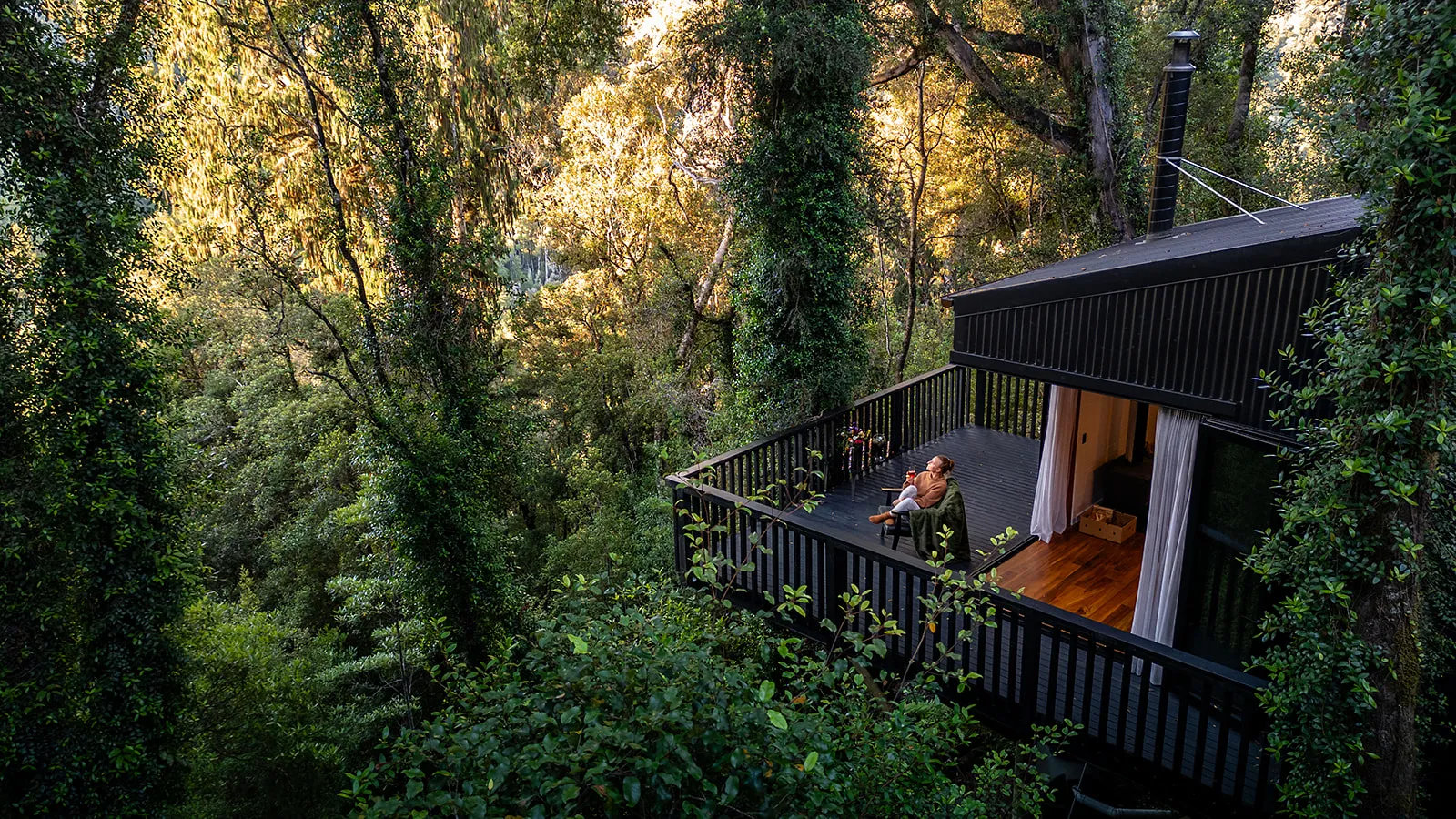
Once the land was secured, the next step was choosing exactly where to build.
The property offered multiple potential sites. After walking the terrain repeatedly, three possible locations were shortlisted — all within practical reach of road access while still immersed in native bush.
Design and engineering support came from a trusted team who understood both the ambition and the environment. This wasn’t a novelty structure. It needed to be structurally sound, long-lasting and fit for West Coast weather.
Alongside the main treehouse, a separate bunkhouse was built for children — creating a practical family-friendly layout without compromising the integrity of the main structure.
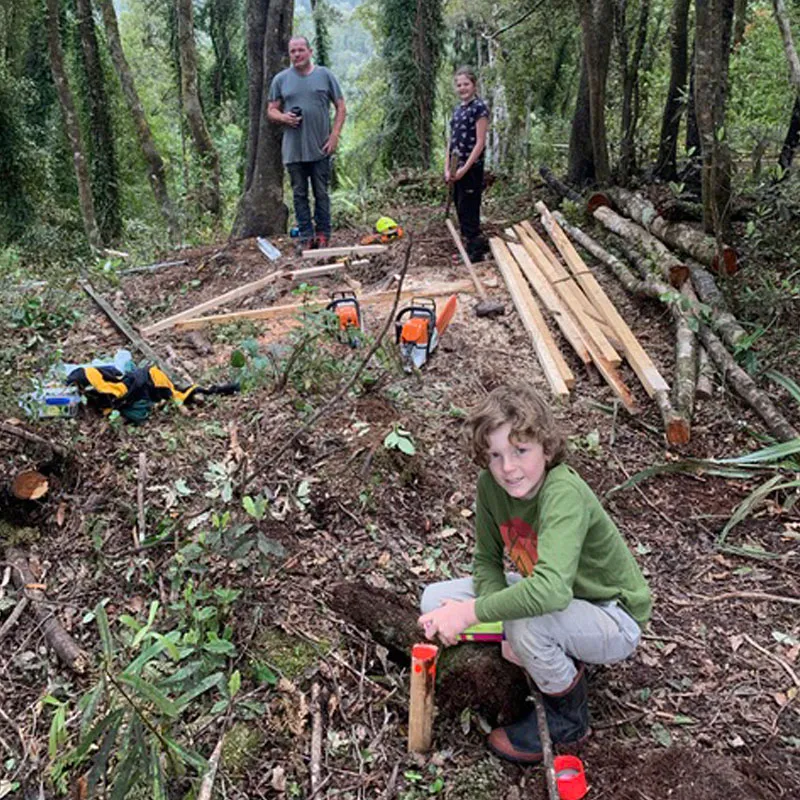
From the outset, the priority was to minimise environmental impact. The smallest possible machinery was used to dig the pole footings. Materials were carried in piece by piece, much of it by hand. There were no large-scale clearances or heavy disruption to the forest floor.
All timber was sourced locally and processed within 10 kilometres of the property — supporting local industry and reducing transport footprint.
Building in native bush is slower. Harder. Less convenient.
But it was important that the structure felt anchored in place — not imposed on it.
By August 2019, the frame of Te Aka was standing among the trees.
The ultimate West Coast escape — off-grid, indulgent, unforgettable. Your space to rest, reconnect, and explore untamed wilderness.